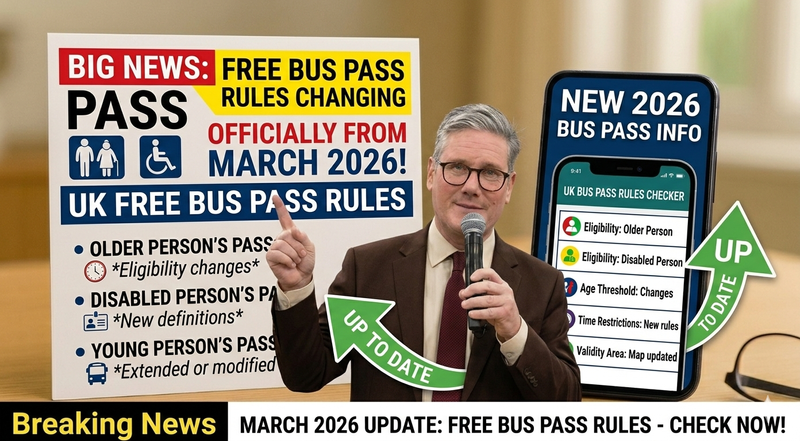
Many older people across the UK have recently seen news about free bus pass rules changing from March 2026, and naturally, this has raised a lot of questions. For many pensioners and disabled passengers, free bus travel is not just a benefit — it’s something they rely on for shopping, medical appointments, and staying socially connected.
So what exactly is changing? Will people lose their free travel? And who will be affected the most?
Here is a clear, simple explanation written in a natural way so you can fully understand what the new rules actually mean.
Why Bus Pass Rules Are Changing in 2026
The free bus pass scheme in England operates under the English National Concessionary Travel Scheme, which allows eligible older and disabled residents to travel for free on local buses during off-peak hours.
One important thing many people don’t realise is that bus pass eligibility is linked to the State Pension age, not a fixed age like 60 or 65. As the State Pension age increases, bus pass eligibility changes as well.
Because the State Pension age is gradually rising from 66 to 67, the government is adjusting concessionary travel rules to match this change.
The Biggest Change: Eligibility Age Increasing
The most significant rule change affects new applicants, not existing pass holders.
What is changing?
- Previously, many people qualified for a free bus pass at age 66.
- From 2026 onwards, eligibility will gradually move to age 67 in England.
- This change aligns with the increase in State Pension age.
This means some people who expected to receive their free bus pass at 66 may now need to wait an extra year before qualifying.
Will Current Bus Pass Holders Lose Their Free Travel?
This is one of the biggest worries — but for most people, the answer is no.
If you already have a valid concessionary bus pass:
- Your pass will normally remain valid until it expires.
- Free travel is not being removed overnight.
- Renewals will continue under updated rules, and councils usually inform users in advance.
The changes mainly affect people who have not yet applied for a pass.
Changes Starting From March 2026
While the eligibility age change becomes more noticeable during 2026, some areas are introducing local improvements at the same time.
For example, in parts of Greater Manchester and Stockport, restrictions preventing travel before 9:30am are being removed, allowing all-day free travel on certain local bus networks.
This shows that bus pass rules can vary depending on local council decisions.
Free Travel Times – Are They Changing Nationwide?
Under national rules in England, free bus travel usually applies:
- After 9:30am on weekdays
- All day on weekends and bank holidays
These national minimum rules remain in place. Local authorities can choose to offer extra benefits, such as earlier travel times, if they fund them themselves.
So while some local areas may expand access, there is no nationwide removal of free travel hours.
Disabled Bus Pass Holders – Important Update
Good news for disabled passengers: the age-related changes do not affect disability-based bus passes.
If you qualify because of a disability or long-term health condition:
- Your eligibility is not linked to pension age.
- Your rights under the scheme remain protected.
- Existing passes continue under current rules.
The concessionary travel system still prioritises accessibility for disabled residents.
Why the Government Is Making These Changes
There are two main reasons behind the updates:
1. Rising State Pension Age
As people live longer, retirement ages have gradually increased. Benefits linked to pension age — including bus passes — are being adjusted accordingly.
2. Financial Sustainability
Local councils fund part of concessionary travel. With transport costs rising, authorities are reviewing schemes to keep them affordable long term.
The government says the goal is to protect free travel while ensuring the system remains financially sustainable.
Digital Bus Passes and Stronger Checks
Another quieter change happening around 2026 is improved administration of bus passes.
Many councils are introducing:
- Digital or smart travel cards
- Online renewals
- Stronger identity and residency checks
- Better card scanning technology
These updates are mainly designed to reduce fraud and make renewals easier for users.
Differences Across the UK
It’s important to know that bus pass rules are different across UK nations.
- England: Free travel from State Pension age (rising to 67)
- Scotland: Free bus travel from age 60
- Wales: Free travel from age 60
- Northern Ireland: Free travel from age 60
Transport policy is devolved, so each nation sets its own rules.
How These Changes Affect Everyday Life
For many people already retired, the changes will have little immediate impact.
However, those approaching retirement age may need to adjust plans slightly. Someone expecting free travel at 66 might now need to budget for transport costs for an extra year.
At the same time, improvements in some regions — like extended travel hours — may actually make travel easier for existing pass holders.
What You Should Do Now
If you rely on a free bus pass or expect to apply soon, here are some simple steps:
- Check your eligibility age using your date of birth
- Keep an eye on updates from your local council
- Make sure your pass details are up to date
- Renew your pass before expiry
Most importantly, don’t panic if you already have a pass — your free travel is not suddenly ending.
Final Thoughts
The UK Free Bus Pass rule changes from March 2026 are mainly about adjusting eligibility age to match the rising State Pension age rather than removing free travel.
Existing pass holders will generally continue travelling as normal, while new applicants may need to wait slightly longer before qualifying.
Although headlines may sound alarming, the free bus pass scheme itself remains in place and continues to play an important role in helping older and disabled people stay independent and connected.
For many pensioners, the bus pass is more than a travel benefit — it’s a lifeline that supports daily life, and the system is expected to continue for years to come..